
As we move into early 2026, the community pharmacy landscape is facing a seismic shift. While the Inflation Reduction Act (IRA) was designed to lower patient costs, the operational reality for independent owners has become a high stakes balancing act. Between the new Medicare Transaction Facilitator (MTF), the Beacon data portal, and the first ten negotiated drugs, your cash flow is under more pressure than ever before.
In 2026, “business as usual” is a recipe for a liquidity crisis. To survive and thrive, you must shift from a reactive mindset to a strategic one. Here is how to stabilize your pharmacy’s financial health in this new era.
Get the 2026 JIT Med-Sync Staff Training Guide
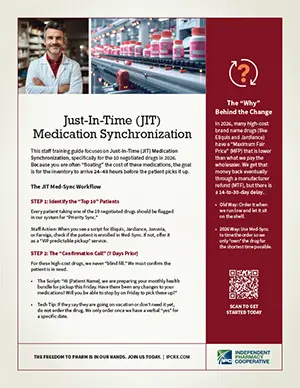
Want to reduce wasted inventory, speed up patient pickups, and protect your cash flow? Download our JIT Med-Sync training guide for the 2026 Top 10 negotiated drugs.
The 2026 Challenge: Float, Refund, and the “Material Concern”
The biggest hurdle today is the Medicare Transaction Facilitator (MTF). This system requires pharmacies to dispense high-spend drugs at the Maximum Fair Price (MFP)—which is often significantly lower than your actual acquisition cost. This means you are effectively “loaning” money to the system, floating the difference while you wait for a manufacturer refund.
Industry data suggests that the average independent pharmacy may need to float upwards of $27,000 per month just for these ten drugs. Without a plan, that’s cash pulled directly from your payroll and inventory budget.
Phase 1: Immediate Cash Flow Protection
Your first priority is shortening the “reimbursement gap.” The standard refund cycle can be slow, but there are levers you can pull right now:
- Self-Identify “Material Cash Flow Concerns”: This is your most powerful tool. When enrolling in the MTF Data Module, you must check the box for “Material Cash Flow Concerns.” This isn’t just a label; it triggers a CMS-backed requirement for manufacturers to expedite your refunds. The goal is a 14-day turnaround instead of the standard month-long wait.
- Master the Beacon Portal: Beacon is the centralized “source of truth” for the 2026 negotiated prices and refund data. Ensure your lead technician or biller is logging in weekly to monitor claims. If a refund is missing or disputed, Beacon is where the battle is won or lost.
Phase 2: The Med-Sync Mandate for the “Top 10”
Inventory management is no longer just about having pills on the shelf; it’s about capital efficiency. You cannot afford to have a $400 bottle of Eliquis sitting on your shelf for two weeks waiting for a patient to walk in.
Medication Synchronization (Med-Sync) is the ultimate solution for the 10 negotiated drugs:
- Eliquis
- Jardiance
- Xarelto
- Januvia
- Farxiga
- Entresto
- Enbrel
- Imbruvica
- Stelara
- Fiasp/NovoLog
By moving every patient on these medications to a Med-Sync program, you can order the drug just in time. This reduces “shelf-sitting” capital and ensures that your “float time” doesn’t start until the moment the patient actually picks up the script.
Phase 3: Automate for “Zero-Gaps”
In the world of 2026 pharmacy, a 2% error rate in reconciliation can be the difference between profit and loss. You are now tracking two separate payment streams for a single claim: the PBM payment and the Manufacturer Refund.
- Use Automated Reconciliation: Services like Provider Pay have updated their algorithms to specifically track these manufacturer refunds. If you are still reconciling by hand, you are likely leaving thousands of dollars in “unclaimed” refunds on the table.
- Audit Your MTF Enrollment: Double-check that your NCPDP ID and NPI are correctly linked in the MTF Payment Module. Late or incorrect enrollment is the #1 cause of payment delays this quarter.
Final Thought: The Path Forward
2026 is a year of stabilization. By thoughtfully applying the Material Cash Flow designation, mastering the nuances of Beacon, and making Med-Sync a mandatory practice for your highest-cost inventory, you can better shield your pharmacy from the financial pressures brought on by IRA-related changes. While these strategies may not provide absolute protection, they significantly strengthen your ability to manage cash flow, reduce unnecessary overhead, capture critical manufacturer refunds, and ultimately enhance your pharmacy’s resilience to ensure you are prepared for future success.
Get the 2026 JIT Med-Sync Staff Training Guide
Want to reduce wasted inventory, speed up patient pickups, and protect your cash flow? Download our JIT Med-Sync training guide for the 2026 Top 10 negotiated drugs.