
Independent pharmacy owners are constantly being told to find new revenue. Add a service. Add a program. Add a product line. Those things matter. But before you go looking for the next new thing, take a hard look at the money already flowing through your pharmacy. You may be losing more of it than you realize.
$36,000/year
Potential processing costs on $100,000/month in card volume.
Start With Credit Card Processing
Credit cards are convenient for patients, but they are not free for the pharmacy. Processing fees commonly run around 2.2% to 3.5% per transaction, depending on your processor, card type, pricing model, and transaction method. That may sound manageable until you annualize it.
If your pharmacy processes $100,000 a month in card transactions and your effective cost is 3%, you are paying about $3,000 a month, or $36,000 a year. At $200,000 a month in card volume, that becomes about $72,000 a year.
And card use is not slowing down. The Federal Reserve’s 2026 Diary of Consumer Payment Choice found that credit and debit cards account for about two-thirds of all consumer payments. Consumers made an average of 16 credit-card payments and 15 debit-card payments per month, and 38% said credit was their preferred in-person payment method. So this is not an expense you can simply avoid. The better question is: How much of it should your pharmacy continue to absorb?
Know Your Effective Rate
Start by pulling your merchant-processing statement. Take your total card-processing fees and divide them by your total card volume.
If you processed $125,000 and paid $3,875 in fees, your effective rate is:
$3,875 ÷ $125,000 = 3.1%
That is roughly $46,500 a year in processing expense if the numbers stay consistent.
Now imagine you can bring that effective rate down.
If you are paying 3% on $100,000 in monthly volume and can reduce that to 2.2%, you save about $800 a month, or $9,600 a year.
You did not need another patient to create that $9,600. You simply kept more of the revenue you already earned.
Consider Cost Offset
The next opportunity is a properly structured credit-card cost-offset program.
If $60,000 of your monthly payment volume is eligible credit-card transactions and you offset 2.5% of that cost, that is approximately $1,500 per month, or $18,000 per year, that your pharmacy may no longer have to absorb.
There are rules here. Credit and debit are not treated the same. Mastercard, for example, allows qualifying credit-card surcharges under certain conditions but prohibits surcharging debit cards. Disclosure requirements and state laws also apply. (Mastercard)
This is not something to make up at the register. It needs to be built correctly.
Then Look at What Happens During Checkout
Once you start looking closely at the payment process, another opportunity becomes obvious.
Checkout itself can generate revenue.
A patient paying for a prescription may also need a supplement, pain reliever, allergy product, digestive product, vitamin, or other wellness item. If you make those products easy to add during checkout, you can increase the value of a transaction that was already happening.
The math does not have to be dramatic.
If 1,000 patients a month add an average of just $5 in OTC products, that is another $5,000 in monthly sales, or $60,000 in annual sales.
Your profit depends on product margin, of course, but this is still incremental revenue you did not have before. It is also a better way to think about front-end sales. You do not always need more foot traffic. Sometimes you need to do a better job capturing the opportunity that is already in front of you.
Delivery Should Not Automatically Be Free
The same principle applies to delivery. Independent pharmacies often provide delivery because it is part of the service patients value. But the pharmacy is still paying for it. You have labor, fuel, insurance, vehicles, routing, technology, and staff time wrapped up in that delivery.
If you complete 500 deliveries a month and charge a $5 delivery fee, that creates $2,500 a month, or $30,000 a year, in additional revenue.
That does not mean every pharmacy should charge the same fee. It means you should stop assuming convenience has to be free. If the patient values it and you are paying to provide it, there may be room to monetize it.
Solutions at Hand
This is where vendor solutions become useful because there are opportunities already in place and in one platform at no cost to the pharmacy.

Nimble features a Cost Offset option that allows pharmacies to use either a percentage-based administration fee or a flat-dollar amount on eligible credit-card transactions to help reduce processing expense.
Nimble also gives your pharmacy an opportunity to add OTC, supplement, and wellness items available during checkout, which can help increase basket size and front-end revenue. As a bonus, pharmacies have the ability to add a delivery fee for patients who choose home delivery.
So instead of viewing payment processing as one expense, you can turn the same transaction into three separate opportunities:
- Offset processing costs.
- Increase OTC sales.
- Get paid for delivery.
You are not building three complicated new businesses. You are improving the economics of transactions already happening every day.
Getting Started
Before you chase another revenue program, pull your processing statement, look at your checkout process, and look at what you are charging for delivery. There may already be more cash sitting inside your current workflow than you think.
Keep more. Sell more at checkout. Charge for convenience. Make every transaction work harder.
Cash Corner brings these practical strategies together with one goal: helping you make every part of your pharmacy work harder. The opportunity is already in your pharmacy. Cash Corner helps you find it.
About the Author
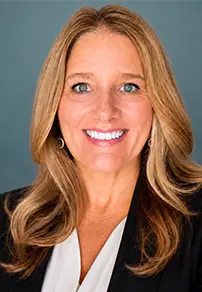
Kelli Stovall, RPh, EMBA
Vice President of Pharmacy Services
Independent Pharmacy Cooperative
Kelli Stovall, RPh, EMBA, is Vice President of Pharmacy Services at Independent Pharmacy Cooperative (IPC), where she leads strategy and programs that support independent pharmacy growth and performance. She brings more than 20 years of experience in community pharmacy, with a focus on clinical services, operations, and revenue-generating opportunities for pharmacy owners.