How Henry Marquard Brings a Root-Cause Approach to Independent Pharmacy Advocacy
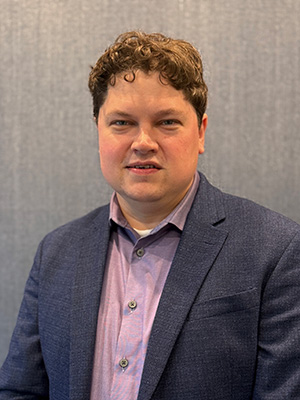
Henry Marquard has spent his career representing members, constituents, and communities, and he believes the best advocacy starts with listening. After working in Congress, leading government relations for a regional chamber of commerce, and advocating for a health system, Henry joined IPC with a simple philosophy: learn first, then represent, and fix the system instead of patching it. One week in, he is already asking big questions and sharing what drew him to IPC.
Before joining IPC, what did your career path look like, and which experiences best prepared you for your role today?
I come out of government and government affairs work, a lot of it in health care. After college, I worked three cycles for Congressman Dave Loebsack in the U.S. House of Representatives. He was a real champion on pharmacy issues, so I got to work with pharmacies in our district and represent them in D.C.
Since then, I have been doing government relations for different organizations. One was the Quad Cities Chamber of Commerce, a merged chamber and economic development organization serving Eastern Iowa and Western Illinois with about 2,000 business members. I handled their government relations for Iowa, Illinois, and federal issues. I then did the same for five years at Genesis Health System.
Health care is an area I am very passionate about. It is full of challenges these days, and being able to advocate for a network that gets people the care, services, and drugs they need is an absolute delight. Coming to IPC feels like a culmination of all of it: learning how to represent a membership at the Chamber, representing constituents in Congress, and navigating the complicated mix of state and federal policy.
What made you say yes to IPC?
I loved working at Genesis and thought it might be my last stop until it was acquired. Since then, I had been looking for a place with that same strong sense of professionalism and a real desire to excel at everything it does.
I also wanted to add value by doing a deep, substantial dive, not just finding a line somewhere and playing with it. Too often in government relations, people go for the band-aid fix. It makes for a nice win to point to, but you have to come back next year and do it all over again. A driving point in my career has been figuring out how to fix the root issues and change the system so things actually work better.
In my interview process, it was abundantly clear that IPC is a group of people looking for those answers. IPC values more than aggregating pharmaceutical purchasing. It is looking to move the industry forward.
You have been here about a week. What ideas or initiatives are you most excited to bring to the team?
I would be speaking out of turn to share too many specifics this early, so I will answer a related question instead. IPC has had a lot of success at the state, multi-state, and federal levels, and you do not get consistent success like that without a really good team and system in place. I am not coming in thinking IPC needs a huge shake up.
What I hope an outside perspective does is help me look at the same challenges the team is looking at, ask a few additional questions, and offer a different point of view. I firmly believe you can learn something new every day, and I think that will be true for me and for IPC.
I also have experience in coalition building and getting legislation passed in states that are hostile to what you are trying to do. IPC has a really good toolbox for government relations, and I hope to add another couple of very nice tools to it.
You are still getting to know our members and customers. What are you looking forward to learning most about them?
Honestly, everything. When I worked for Congress, I used to print out Congressional Research Service reports and bring them home to read about issues I was curious about. The congressman I worked for was a college professor before he went into Congress, and he used to say that before you teach, you have to learn, and before you can represent, you have to learn. I appreciate that wisdom more every year.
In government relations, success comes down to how well you understand your clients. Someone contracted to do government relations often looks at things issue by issue. We are here to look at things holistically and systematically.
I am excited to learn about the challenges on both the buy and sell side, how reimbursement models work, and where the opportunities are. Far too often we play defense. What is really fun is finding something pharmacies are already doing that is working well and asking whether we can put it into legislation so other pharmacies can expand on it. You cannot do that without learning what is on our members’ minds on a daily basis.
Who or what has had the biggest influence on the direction of your career?
Ironically, a combination of my dad and my grandfather. I am the seventh Henry Marquard, and we are a creative family, so we switched up the middle names. I am the fourth Henry James Marquard, and there were three Henry Francis Marquards before me. The five Henrys before me were all attorneys, and my grandfather was a big Chicago attorney. I idealized him. He was loving and supportive, but everything was seen through the lens of one day having your own law practice.
I took a year out of college to work as a field organizer for a presidential campaign in the Iowa caucuses, and his response was that it would teach me things that would be helpful when I had my own practice. When my grandfather passed away, I was in the process of picking law schools and had already taken my LSATs. My parents always said to do what I wanted, but that is hard when you have a role model like that.
Then one day my dad pulled me aside and said I did not have to do anything to make my grandfather happy. If I wanted to go into government and politics, I should absolutely do it. Politics was always part of my life growing up, and that conversation gave me the go-ahead to say this is what I want to spend my career doing.
If you could give your younger self one piece of career advice, what would it be?
That is a tough one. I am pretty pleased with how things have gone, so I will keep it simple: never be afraid, and always go for the challenge.
When you are not at work, what are you most likely doing?
Being a dad, being a dad, or being a dad. I have two sons, ages 11 and 8, with far more energy than I could possibly have, and they are the absolute best parts of my life. I am a Cub Scout leader and I coach soccer for both of them. I love being a really engaged dad.
Is there anything we did not ask that you would like to share?
I am a firm believer that there may be dumb questions, but there are no questions not worth asking. You do not know if it is a dumb question until you have gone down it. I am never afraid to ask people for things or reach out, and I hope my colleagues feel the same. I have a very open door, and I love hearing a new perspective. If you have a question, please do not hesitate to let me know.